🔑 From snowmobiles to motorcycles: Building an outdoors empire
Welcome to The Business Buying Academy with Sieva Kozinsky.
🔑 How to acquire $4 billion in outdoor brands
In the 1950s, three business partners developed an early snowmobile prototype using spare parts from a farm.
Today, the company they created is worth over $4 billion.
The business has done some of the best acquisitions in the outdoor industry, rolling up several iconic brands within a $4 billion empire.
Let's jump into the story of Polaris.
Brothers Edgar and Allen Hetteen and friend David Johnson assembled spare parts (like a grain silo conveyor belt) and some scrap metal to make one of the first modern snowmobiles.
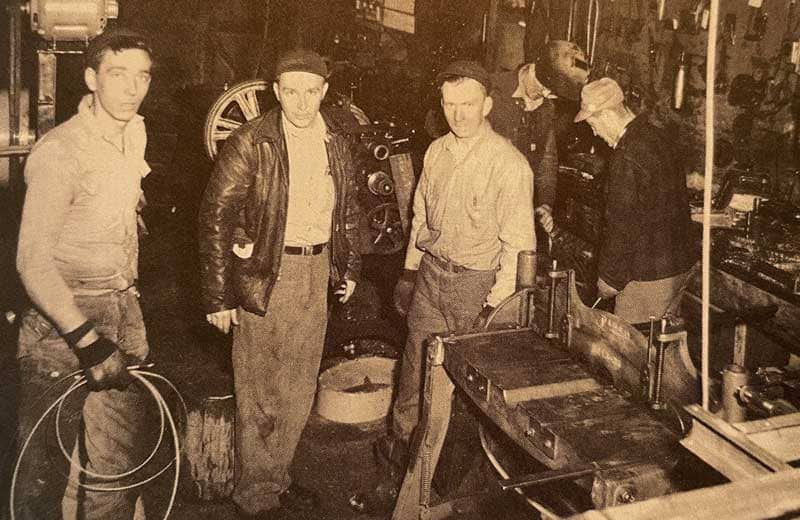
Polaris Industries was born.
The first production model, the Sno-Traveler, first sold in 1956. Edgar Hetteen promoted the product with a famous 1,200-mile Alaskan trek in 1960 but later left the company amid disagreements and founded a competitor that evolved into Arctic Cat.
Polaris quickly grew through the 1960s and sold its snowmobile as outdoor recreation emerged as a profitable industry.
Slightly more than a decade after its creation, Polaris was bought out.
But this isn't even close to the end of our story.
Sale to Textron (1968)
At the height of the 1960s snowmobile boom, conglomerate Textron acquired Polaris for $11 million.
Textron was a diversified industrial company whose holdings at the time included E-Z-Go golf carts, Bell helicopters, Talon zippers, and Schaefer pens.
They wanted to get a piece of the new snowmobile business too.
Under Textron, Polaris continued snowmobile production and benefited from corporate engineering resources (including improved engines).
Buyback from Textron (1981)
By the late 1970s and early 1980s the snowmobile industry faced severe challenges:
- Market overcapacity
- Several “brown winters” with low snowfall
- Gasoline shortages that lowered demand for recreation vehicles.
Textron decided it wanted out of the snowmobile business.
Their lCEO directed Polaris’s then-president, W. Hall Wendel, Jr. (appointed president in 1980), to sell the division, but a potential sale to Canada’s Bombardier fell through due to threatened antitrust action by the U.S. Department of Justice.
Liquidation of the Roseau, Minnesota operations (Polaris' HQ before the acquisition) became a real possibility.
In July 1981 a management group led by Wendel executed a leveraged buyout, creating the independent Polaris Industries (initially structured as a limited partnership).
The buyout preserved the company and its Minnesota manufacturing base. Operations restarted lean:
- The Roseau plant began with a skeleton crew.
- Workers voted to decertify the union
- The company adopted a more participatory, Japanese-inspired labor model emphasizing employee involvement and knowledge of the machines.
After stabilizing the struggling business, the mid to late 1980s were a time for growth.
The company expanded significantly beyond snowmobiles with a series of new product lines and acquisitons:
- 1985: Launched its first American-made ATVs (Scrambler and Trail Boss).
- Introduced the RANGER side-by-side in the mid 1990s.
- Launched Victory Motorcycles (1997) and acquired other motorcycle brands.
- Developed the RZR sport side-by-side (2007)
- Expanded manufacturing (including facilities in Mexico, Alabama, and Poland).
- Reacg $2 billion (around 2011) and $5 billion (2017). It debuted on the Fortune 500 in 2018.
- Renamed Polaris Inc. in 2019.
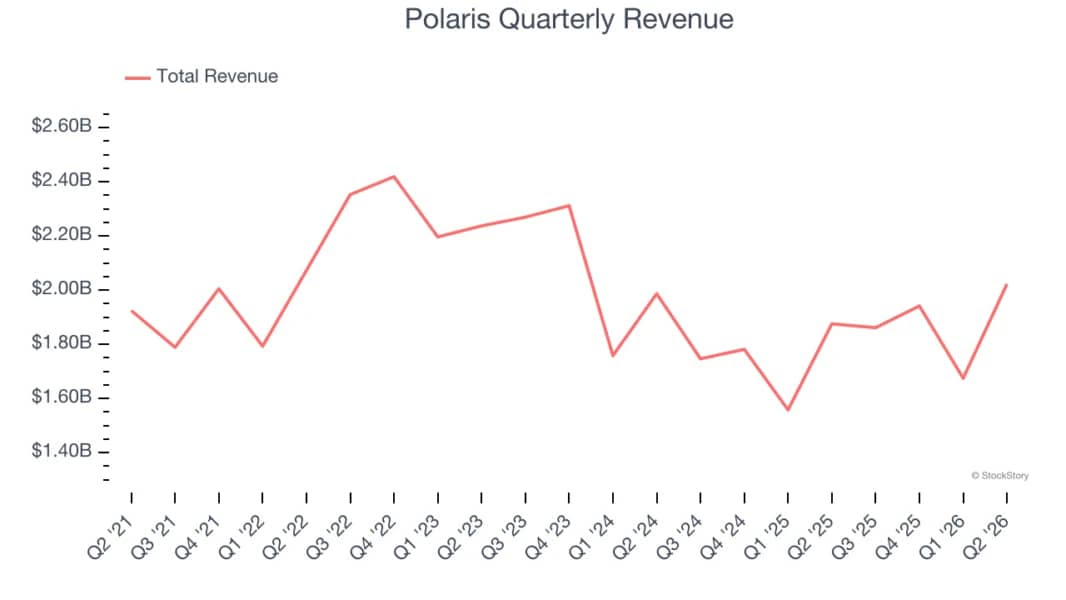
Polaris hit $1 billion in annual revenue by 1996, $2 billion by 2011, and does about $7 billion today.
Major Acquisitions:
- Indian Motorcycle (April 2011) - Acquired the historic American motorcycle brand. Polaris expanded production, but eventually sold off a majority stake in 2025 for an undisclosed sum.
- Aixam-Mega (April 2013) - Acquired the French maker of quadricycles and light vehicles. The business had $110 million in sales in 2012. Strengthened Polaris’s small-vehicle and European presence.
- Transamerican Auto Parts (November 2016) - Acquired the leading manufacturer, distributor, and retailer of off-road Jeep and truck aftermarket accessories for $665 million. Polaris sold the business in 2022 to Wheel Pros for approximately $50 million, a significant loss.
- Boat Holdings LLC (completed July 2018) - Acquired the privately held boat manufacturer (brands: Bennington, Godfrey, Hurricane, and Rinker) in an all-cash deal valued at $805 million. Boat Holdings generated about $560 million in sales in 2017 and was the largest U.S. pontoon boat maker. Polaris still owns the business, which is profitable.
- WSI Industries / Washington Scientific Industries (2018) - Acquired the vehicle parts manufacturer for $24 million (or
Polaris has purchased dozens of other brands to diversify into boats, motorcycles, and outdoor accessories.
But they've also been quick to sell business lines, often at a loss, due to the sharp cyclical turns of the outdoor recreation business.
Full Year 2025 Financial Results:
- Sales: $7.152 billion (basically flat vs. 2024’s $7.175 billion)
- Reported diluted EPS: loss of $8.18
Sieva
Disclaimer: nothing here is investment advice. Please do your own research. The information above is just for information and learning.
.png)

